
Most people don’t realise it, but the biggest mistake new streamers make happens before they ever hit the “Go Live” button. It starts off sounding smart — planning everything out, thinking ahead, trying to avoid mistakes — but it quickly turns into something far less productive. They want the perfect debut. The perfect setup. The perfect moment where everything runs smoothly, looks professional, sounds clean, and gives off the impression that they’ve got it all figured out from the very beginning. On paper, that sounds like a great approach. In reality, it’s completely backwards. If you’ve never streamed before, you don’t actually know what you’re planning for, so all you’re really doing is delaying the only thing that’s going to teach you anything: actually going live.
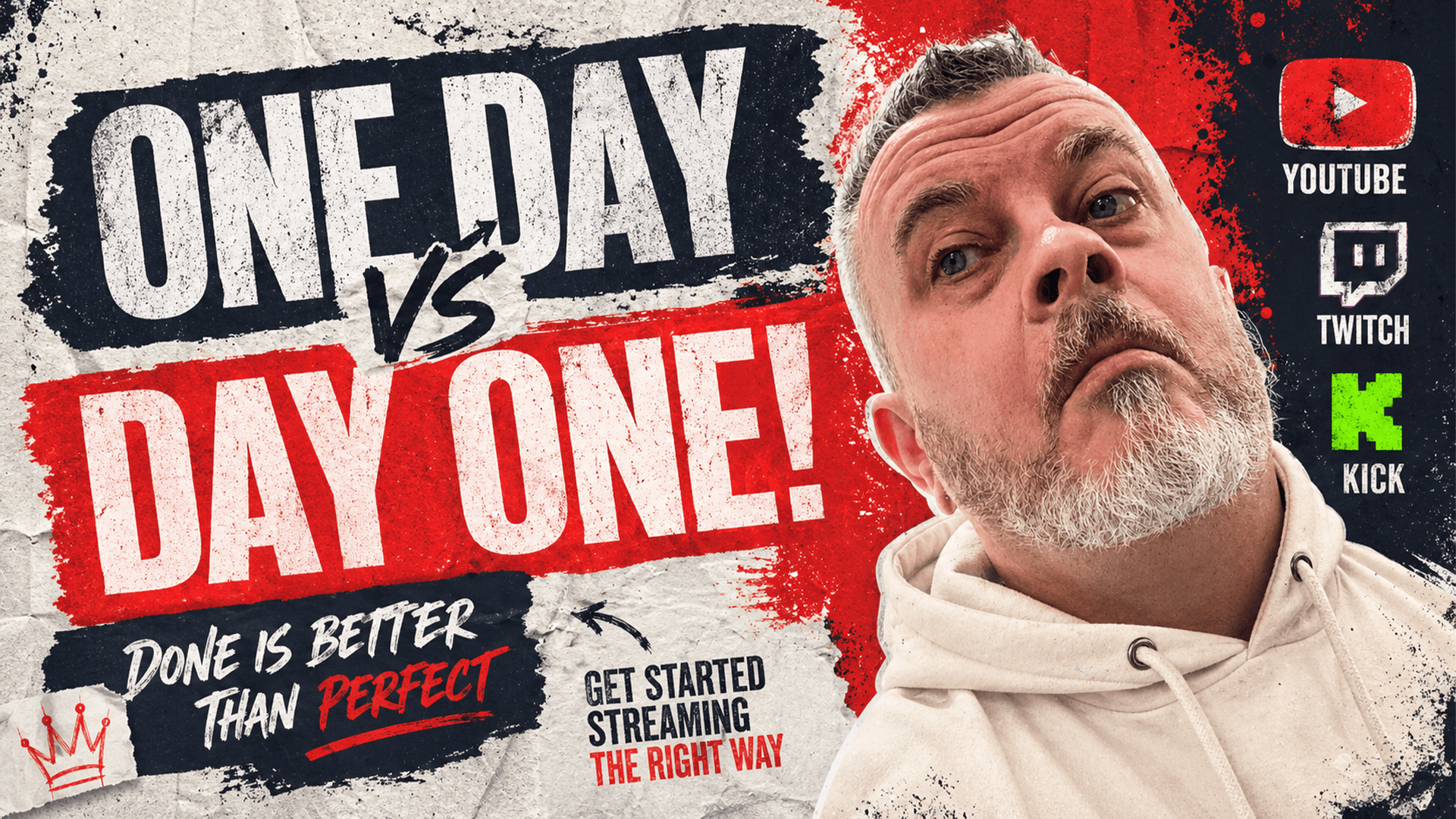
This is where the whole idea of One Day vs Day One becomes brutally relevant. “One day” is where most people live. One day they’ll start streaming. One day they’ll have the right setup. One day they’ll be ready. It feels productive because you’re thinking about it constantly, maybe even researching gear, watching tutorials, tweaking ideas in your head, but none of that translates into progress. “One day” is comfortable because it removes the risk of failure. You can’t mess up a stream that doesn’t exist. The problem is, you also can’t grow from it. Meanwhile, “Day One” is messy, unpredictable, and a bit uncomfortable — but it’s the only place where anything real actually begins.
A massive part of this hesitation comes down to equipment. People convince themselves they need a better PC, a better controller, a better webcam, a better microphone — and yes, all of that is nice to have. Nobody is saying high-quality gear is pointless. But the issue is the timing. Waiting until everything is “perfect” before you start is costing you something far more valuable than money — it’s costing you time in front of an audience. While you’re sitting there holding off for upgrades, someone else with a basic setup is already live, already learning, already building connections. By the time you finally feel “ready,” they’ve potentially built momentum you haven’t even started on. You could easily find yourself 200 followers behind where you might have been if you’d just started earlier, instead of being 200 up because you chose action over hesitation.
That’s why the phrase “Done is better than perfect” isn’t just motivational fluff — it’s a practical strategy. A stream that happens, even if it’s rough around the edges, is infinitely more valuable than a flawless stream that never exists. Every time you go live, you’re learning something you couldn’t have planned for. You start noticing things you didn’t think about — your pacing, your energy levels, how you handle silence, how you react to chat, how your setup actually performs under real conditions. None of that comes from preparation alone. It only comes from doing. You refine over time, not before you begin.
Another thing that gets massively overestimated is how much viewers actually care about your setup. Yes, decent audio matters. Yes, having a clear image helps. But that’s not why people stay. The real selling point is you — your personality, your reactions, your ability to entertain or connect. People aren’t tuning in to admire your microphone choice. They’re tuning in to see if they enjoy being there. You could have a top-tier studio setup, but if the content is flat, it won’t carry you. On the flip side, someone with a basic setup but strong personality can build a loyal audience because they’re engaging to watch.
That’s also why starting doesn’t have to be expensive. There are simple, smart ways to get going without throwing money at the problem. For example, using something like Elgato EpocCam lets you turn your phone into a perfectly usable webcam and microphone setup without investing in a DSLR or studio mic right away. It’s not about cutting corners — it’s about removing barriers so you can actually start. And there’s a very real chance you might discover streaming isn’t what you expected. It happens more often than people admit. If you’ve sunk a load of money into getting everything “just right” before you even try it, that’s a risk you didn’t need to take.
There’s also something deeper at play when it comes to building an audience, and it’s something beginners consistently overlook. People don’t just want to see a finished product — they want to be part of the journey. They want to watch you improve, figure things out, upgrade over time, and grow into what you become. That’s what creates a genuine connection. When viewers feel like they’ve been there from the early days, they’re far more invested. They’re not just watching content; they’re part of the process. If you wait until everything is polished and complete, you remove that opportunity entirely. You’re asking people to show up at the end instead of inviting them along for the ride, and that’s not nearly as compelling.
The reality is, there is no perfect moment to start streaming. There will always be something that could be better, something you could upgrade, something you could tweak. If you keep chasing that idea of perfection before taking action, you’ll stay stuck in “One Day” indefinitely. Meanwhile, the people you look up to didn’t wait for perfection. They started before they felt ready, learned through experience, and improved because they had no choice but to adapt. That’s the path that actually leads somewhere.
So it really comes down to a simple decision: One Day vs Day One. One keeps you thinking about streaming. The other gets you doing it. One feels safe but leads nowhere. The other feels uncertain but builds everything. And if there’s one thing worth drilling into your head before you even think about your first stream, it’s this — done is better than perfect, every single time.